Showing posts with label fashion. Show all posts

Sunday, 21 June 2026

Essential Snobbery 101: The King's Button

The King's Button

Edward VII was reputed to be a man who loved the pleasures of life, and his girth bore witness to this. At the table, he would leave the bottom button of his waistcoat undone, a practical habit that lent itself to ease and spared the garment the wear of exertion or extension on account of eating.

Observers at the table, nobles and servants alike, must have noticed this, and so it became the style. The party prince who became king after Victoria's long reign did it, and so should his subjects; consequently, this was deemed the way to dress. In time, the habit travelled beyond the waistcoat to the jacket and the suit, where it endures to this day.

How Custom Passes

The role of observers, those who watch a habit harden into a custom, is important to understanding how matters of style and taste are passed on. The observation must occur in close proximity and with a semblance of regularity, if one is to distinguish the trendy and the customary from a mere slip. The same applies to conduct, communication, and comportment, along with the courtesies that attend them.

A Quiet Decline

Recently, as I have gone about my own pursuits, it has come to my notice that elements of style and taste are not as commonplace as one would hope. Many gentlemen, and I use the word liberally, from the young to the much older, wear their jackets with every button done up.

There are times when I have had the urge to point this out, but such a thing is only acceptable with people you know, not with strangers. It suggests that the knowledge simply is not there. Style, however, is not optional; it is descriptive on sight, speaking before a single word is uttered.

There Is No Finishing School

I have been fortunate to keep the company of those who know these particular things, and to learn from them: leaving the lowest button undone, undoing all the buttons when sitting down, how to knot a tie, how to match a pocket square, and so on.

There is no class or finishing school for this. You learn it through association, something you have seen your father, uncle, brother, friend, mentor, or teacher do, where on occasion they have extended a hand to make that slight adjustment which separates you from a ragamuffin.

The Quiet Inheritance

There is a name for what I am describing, though I had circled it for years before I learnt it: cultural capital. It is the quiet inheritance of knowing, the accumulated sense of how things are done, passed not through lectures but through living alongside those who already possess it.

Unlike money, it cannot be handed over in a single gesture; it must be absorbed slowly, through observation and the occasional corrective hand on the shoulder.

What troubles me in my own observation is that this transfer appears to be faltering. The fathers, uncles, and mentors who once made that slight adjustment seem fewer now, or perhaps less inclined, and so a generation arrives at adulthood with the wardrobe but not the wisdom, the garment but not the grammar of wearing it.

Style as a Map

It is strange how a mere observation can tell of the road you have travelled, and how, in certain settings, it becomes the key to gaining access or being barred.

I want to be clear that this is not a plea for gatekeeping; I take no pleasure in barriers, and I would sooner extend the hand than withhold it. Yet I would be dishonest to pretend that appearances do not, quietly and often unfairly, dictate access.

A door opens or remains shut, an introduction is offered or withheld, a judgement is formed and acted upon, all before a word has been exchanged.

The cruelty of it is that those most affected are frequently the least aware it is happening, mistaking the closed door for bad luck rather than a code they were never taught to read. To name this is not to endorse it. It is simply to acknowledge that the rules exist, that they operate in silence, and that ignorance of them is rarely the fault of the person left standing outside.

No Personal Fault

This is not to be judgemental, even towards the utterly pretentious; eventually, that discomfort with one's appearance is betrayed by embarrassment. It is upward mobility expressed in acquisitive adornment, yet bereft of the quiet sophistication of the how and the why.

Whether this calls for a school of style, I cannot tell. It is not as though these people considered consulting the largest repository of knowledge, the Internet at their fingertips, to ask questions of style and taste as readily as they might ask for a recipe.

Invariably, as my gaze falls upon these occurrences, I am reminded that not knowing, or not caring, is not so much a personal fault. You were simply not privileged to keep the company of that kind of positive influence.

The Shops, and Where I Stand

Let us not forget the shops. I will not step into a suit shop where a mannequin has been improperly attired, as it suggests the staff have paid no attention to detail.

In one such shop, I asked to be fitted, but I was dismissed to the fitting room as though I were trying on a casual shirt or a T-shirt. I did not waste another minute there.

I do not intend to become a consultant on style. Rather, I will stick to the comfort of the familiar.

An Edwardian Inheritance

It is fitting, then, to return to the man who began all this. The Edwardian period was one of transition in dress as much as in everything else. For both men and women, this period balanced structured luxury with newfound freedom of movement. The rigid formality of the Victorian age was loosening, and comfort was beginning, quietly, to earn its place alongside propriety.

Edward VII's most enduring legacy was the tradition of leaving the bottom button of a waistcoat undone, a habit that has since transferred to jackets and suits alike. We observe it now without a thought for its origin, which is rather the point.

A king's button was only ever a habit that others chose to read, to copy, and to pass on. The grammar of how we dress is nothing more than a long chain of such small observations, handed down from one watchful eye to the next, until the day the chain is broken, and someone arrives, jacket fully buttoned, with no one left to make that slight adjustment. Just look away.

Blog - Essential Snobbery 101: The rules on suit buttons (April 2014)

A Google NotebookLM AI Podcast on this blog

Saturday, 14 June 2025

Coronavirus streets in Manchester - LXXVII

Leaps of fleshly walks

It had rained earlier besides the fact that there was a forecast of further rain episodes in Manchester. I was dressed in anticipation of adverse weather, but when I stepped out this afternoon to replenish my supply of cranberry juice that eases urinary tract issues, there was much to see.

There are people still adorning facemasks, they seem to be visitors from the Far East, in my case, I know that the Coronavirus is still about, five years on, because I only recently got my biannual booster, bringing my COVID-19 jabs to ten, in all.

However, as summer is now upon us, you cannot help but notice two things, the lips and the legs. The former is seen in both males and females, lips filled like balloons with fillers or Botox, all so unnaturally like big-lipped fish, very much the giant grouper or the Napoleon wrasse look. [A-Z Animals: Fish with Big Lips]

Flesh is not quite fresh

This is one case where beauty is hardly in the eye of the beholder other than whoever wants this unsightly cosmetic procedure that distorts from the natural and presents the utterly bizarre. For this and the latter issue, much as you want to look away, you are forced to see the indescribable that speaks louder than farce.

The rising mercury allows for the revealing of more skin, from shorts that should only be worn for a burlesque performance in a dingy poorly lit nightclub, well away from our common streets, to body parts that are best kept under wraps.

Whatever makes these fashion trends attractive fails to persuade me of either the self-awareness or the sensibleness of the purveyors. Yet, one must live and let live. Each time I walk through Manchester, one must curb the need to comment after seeing the outrageous to the dastardly.

It is still a bustling city of contrasts, changed and changing by circumstances, residents, and visitors alike. We cannot forget that the pandemic also wreaked havoc on our idyllic existence.

Friday, 30 May 2025

Every pretension to Africa for Africa Day

Africa Day in Manchester

I had planned nothing for the past Bank Holiday weekend except to catch up on some much-needed rest and sleep when I was offered a ticket to attend the Echoes of Africa event at Aviva Studios/Factory International on Saturday the 24th.

This was in commemoration of Africa Day, previously known as African Freedom Day or African Liberation Day, initiated by the Organisation of African Unity on the 25th of May 1963.

Looking at the agenda of events running from 11:00 AM to 6:00 PM, I was unsure if I had the stamina for 7 hours of potential revelry and entertainment, but I was determined to show up, if only out of gratitude for the invitation.

Please, I’m not fooled.

The Live Painting Workshop, which had begun in the early afternoon, was already underway when I arrived. I took a seat on one of the long sofas at the back, and I tempered my cynicism regarding the artistry of the participants, who were pretending to represent some essence of Africa. It easily resembled a messy children’s paint class, yet people of all generations were engaged in it.

We have been led to believe that a certain combination of vibrant colours and abstract shapes is representative of Africa in context or origin; it reflected everything Toto’s Africa was, but not the reality of what Africa is. The inspiration for the song originated from a late-night documentary about Africa and likely the recollections of missionaries to Africa who became teachers for American schoolchildren.

An unrelatable discussion

The next item on the agenda, beyond the over-representation of Nigerians on the discussion panel, focused on a topic likely more suited for those seeking a career in Afrobeats or some contemporary genre of African music. Having first met a lady of Portuguese and Guinea-Bissau descent who knew the lyrics to everything the female disc jockey played; I spent more time with a grandmother of Caribbean heritage tending to her noticeably Caucasian grandson.

Indeed, what is now deemed the music of Africa is quite pervasive; it has a global audience, and collaborations are extending its reach into places one would never have expected such music to resonate.

Yet, in my conversation with the grandmother, I thought a more relevant topic would be how we preserve the significance of our African heritage in the diaspora and provide younger generations a sense of belonging in the various spheres that influence education, experience, and identity.

Music and fashion to the world

Perhaps this was not the forum for such a cerebral debate, and thus far, it had only intensified my scepticism regarding the purpose of this gathering. Each time we were urged to make more noise like Africans, there was a feeling that English reserve had crept upon us unawares.

The live music performances were interesting, but I knew none of the artists or their music, and I was barely connecting until one performer took the stage like the Bobby Caldwell of Afrobeats.

If there were no visuals, one would imagine the performer hailed from a large city in Africa; he had mastered everything and could pass for being as good as the popular Afrobeats artists.

Then came the fashion show; the mispronounced words by the compere regarding atelier to Aso oke were quickly forgiven when it became clear that the distinction between African designer and African fashion meant the latter garnered less attention compared to the former. Some of the items showcased on the catwalk were comical at best, but I am not the target audience for this kind of attire.

Before I knew it, it was almost 6:00 PM—a delightful day out and a reminder that the Echoes of Africa were just that; an echo is a reflection of the original sound and should not be mistaken for the real thing.

Sunday, 8 May 2022

Coronavirus streets in Manchester - LXVII

Unlearning to learn anew

The streets present the spectacle of the interesting and the surprising, even the astonishing is offered as one wonders if the past two years have given us any lessons to either learn or ‘unstudy’. I say ‘unstudy’ because there is much, we have learnt from the past that needs a current unlearning to make allowances for new and different aspects of knowledge, but there must be a willingness to adapt, or nothing changes.

I wondered too when yesterday I was out and about, at one indoor place where I had brunch, it occurred to me that I was not as concerned to put on my mask, the thought was scary, especially after realising that people I know had so recently contracted COVID-19. At one beer garden, you could be forgiven for thinking Octoberfest had an early opening day in Manchester.

Nature against lashes

On another note, passing by three ladies and that is as qualified as you would get it, They were sat on benches chatting away, one of them daintily holding a lit spliff and puffing at it, that was not what piqued my interest, but that the eyelashes on two of them were was sweeping and prominent as to have the means of setting off a hurricane if nature were to acquiesce to the batting of them and syncopate with their demonstration of flair.

Then I was wondering again about fashion that does not seem to have reason, meaning, or sense, then, what do I know? Before I begin to study the physics, biology, chemistry, and adequacy of such ocular embellishments that are grandiose in the extreme as to be comical for clownery. But hey! Each to their own.

Tuesday, 12 April 2022

Essential Snobbery 101: Sensible shoes for suffering soles

The shoo of the shoes

In one of those chance conversations, you have with friends, I was informed anecdotally that South Africans look at 3 things in an appearance to rate who you are in class, means, and facility. Your shoes, your watch, and your belt. I would suppose this applies primarily to men, and probably women are assessed on different criteria.

In that same conversation, I learnt that someone had gone to attend an interview and on the basis of the shoes and belt worn by the interviewer, the interviewee decided their interviewer was not of the means or mettle to employ them, and so declined the job offer.

Forced into acculturation

Obviously, one might suggest or opine that those appearances can be deceptive, that to judge ability or character by apparel or appearance is not only superficial but silly. Then again, we are products of influences, cultures, communities, and societies in which we live, and by that, might be unconsciously biased by irrational value systems that define status, when they should never be in consideration.

However, by reason of this somewhat unwritten rule, people adapt and try to play the part not so much to deceive, but to elevate the assessment from apparel or appearance to something more nuanced and probably indicative of the person and personality being engaged.

Then there are times when the application of this rule might be deleterious to the objective of being acceptable, where apparent ostentation and gaudiness might exude means but not class, for the quality of being presentable and yet understated is one that demands a finer educational process that comes with being quite comfortable in your own skin.

Good presentation is rarely exorbitant

In terms, you can wear sensible shoes that are clean and polished without them calling out like neon lights, and if you are not on a catwalk, your shoes are probably not the first thing you want to be noticed for. Likewise, the watch, for what is the point of wearing an expensive timepiece if you cannot keep the time? Whilst I am not suggesting one should plumb for the cheap, there is nothing wrong with adorning yourself with the affordable.

Then on the topic of sensible shoes, and I probably know a bit about that because my feet grew 6 sizes from the age of 7 to 15 and getting the right size of shoes after that was one of a bother, for size 12 (UK)/46 (EU) is not in the typically available or fashionable percentile.

There were times my poor feet were shoehorned in too-tight footwear; I learnt to wince in silence until I could throw off the shoes and walk barefoot. I have better options now, and I avail myself of them in good formal shoes and well-cushioned trainers that allow me to walk long distances without the aid of my walking cane.

Looking good for worse

One sight I cannot put out of my mind was one I saw last weekend, this lady stepped out of the hotel with her husband and a crutch in her right arm, a crutch, not a cane, and she was in high-heeled shoes. I could not fathom the spectacle of someone who needed a crutch and then was traipsing our uneven pavement in those kinds of shoes. I had a cartoon playback in my mind of someone falling so badly that the crutch would be replaced with either a wheelchair or a Zimmer frame.

She might have looked presentable at first sight, and yet it was meretricious; we, for the sake of fashion, sacrifice health and well-being. On the spectrum of opinion, the rating was indelibly low; you live and let live. The case for suffering soles in sensible shoes is made, but not many would heed the sensible part.

Sunday, 13 February 2022

Essential Snobbery 101: Sir Hans Sloane disturbed

What we truly endured

Bluebird took me down memory lane, for what I remember is it was the model of one of the official cars granted to my father in his accountancy prime of the 1980s in the Nissan range, though now, I realise it was a broader model dating from 1995, the one in our fleet of vehicles being the U11 series. This was the thought on my mind as we sought the entrance to the King’s Road restaurant in Chelsea for brunch.

The pictures of food we saw on Google Maps after we realised the Chelsea Farmer’s Market had been gentrified to the standard of unrecognisable and inaccessible, this became our fallback. The young lady, nails all done in a shade of pink that would appear as just pink to men, looked like she had taken on a part-time role as a waiter, untrained, nervous, and unsure, like she was just earning a crust she did not need to be able to go out to party with her girlfriends.

All the appearances of sophistication and shabby chic were soon dispelled, the service was unsupervised and unprofessional, the food pitiable in presentation, I had to scrape the dollops of hollandaise sauce off the eggs royale and still had enough to paint the walls, if I was so inclined. We sat through it with regret and left in haste, for one should resist posting a review on TripAdvisor, for a couple of stars would be overly generous to the lasting impression. Like a Jehovah’s Witness proselytiser, I did half shake the dust off my feet as I left.

Everything off in this place

Then, for the first time ever, I set foot in Harrods and nothing, absolutely nothing, endeared me to the place, and it is why I had never been there before when Fortnum & Mason had proved its standing.

Stopping over at a Harvey Nichols café for a cream tea, two ladies refused to be seated beside us. I won’t want them for company either, as they looked like Madeline Ashton and Helen Sharp, the two protagonists of Death Becomes Her, so artificially enhanced to occlude any semblance of natural beauty that once blessed their visages. Perchance there was a child in that restaurant, it would have squealed in terror at sighting them.

In a fashion for the history

Another patron was so grandly attired in exorbitant designer label apparel that altogether failed the basics of coordination, and it did nothing to enhance her; she was more a clothes ass than a clothes horse. All that money and no fashion sense. Yet, I am informed that having the same designer label in 3 textures and 4 layers of clothes is termed Ghetto Fabulous; what do I know about fashion?

This area of Chelsea and Knightsbridge with its pomposity of class, old and new money, and antiquated aristocracy long past aspiration or adulation, that radiates from Sloane Square was named for Sir Hans Sloane, an Irish physicist from the 18th Century, who was buried at the Chelsea Old Church and out of whose bequest formed the foundations of the British Museum, the British Library, and the Natural History Museum in London. The unsavoury aspects of his provenance and activities are not accounted for in this piece.

Sunday, 31 October 2021

All Hallows Thieves

Never caught on

It is Halloween weekend this October with the last day of the month being today, a Sunday. This is one tradition I have never really adopted or related to, and it is not out of any particular interest or belief, I am just not engaged.

Pumpkins, costumes, fancy dress, and the commercial trends that greet this festival I do my best to absent myself from. Decades ago, I was invited to a toga dress party by my friend, John Coll, who passed on in December 2013. I could not be persuaded to go, my partner then did attend and regaled me to stories that left me somewhat nonplussed. Now I think about it, that was where he met the person that became the centre of our breakup just about a year after.

Blow it up

Whilst I would not predicate that situation to my disinterest in Halloween, it does not explain my engagement with Guy Fawkes Day, which is November the fifth, maybe because I liked his audacity in what he was trying to do and whilst he failed, we commemorate him with a bonfire that would have made a bonfire of the English parliament.

Halloween apparently started as a Christian holiday dedicated to remembering the dead, including saints (hallows), martyrs, and all the departed, but as it is celebrated today, there is no semblance of Christianity or dare I say Churchianity, rather, it is a time of revelling like ghouls, ghosts, the dead and anything scary, evil, or macabre.

That’s a ghost?

Watching Ghostbusters and the reboot Ghostbusters, yesterday and overnight, Western civilisations or maybe it is just the Americans have this strange idea of the supernatural, the paranormal, demonic or spiritual activity. Ghosts apparently leave an ectoplasmic residue of slimy green substance, when they enter our realm, they can be captured with nuclear-powered proton pack weapons.

In one scene as a ghost metamorphosed into a Godzilla creature of extreme mammoth proportions, a symphony played out as it wreaked destruction on the city, having a surfeit of imagination is one thing but along with the power of seriously doubtful fictional creations with a propensity for the absurd if not laughable is just beyond the paled. We might begin to believe if first, we believed in ghosts that Ghostbusters was art imitating life.

Chilling the bones

Then with painted faces and all those costumes, it is the ladies that have me a tad worried. October is not a summer month by any stretch of the imaginable, and though we are not at sub-zero, the temperature is not in double digits, yet they step out in the skimpiest of clothes braving the cold in the pursuit of fashion over function. It makes no sense to me as it does to them, especially when it was raining on Friday night.

I might be an alarmist suggesting that this is asking for a bout of pneumonia in the worst case, but they either have a rather thick blubber skin or their blood system is cryogenically predisposed to a poikilothermic adaptation that we naturally homoeothermic beings cannot endure. I find myself scratching my head and then trying not to overthink it, a little shivering and the clattering of teeth might well be the Halloween movie to watch again and again.

Then I learn there is another Ghostbusters film out, Ghostbusters: Afterlife, the original was really good, but all these rehashes leave much to be desired. Rather than give this a nod, I might just celebrate Halloween as Noddy.

Friday, 10 September 2021

Essential Snobbery 101: In the class of contentment

On a borrowed height

One Sunday morning in the mid-1970s, I asked our houseboy, a man in all respects and a servant in our household, if I could wear his new platform shoes to church. I had feet big enough to fill the shoes, and I was only 9 years old. He obliged willingly.

That morning, we attended church. I looked quite fashionably attired in a suit and borrowed shoes, but my mother frowned on this presentation. In broad terms, we were not brought up to keep up with the Joneses, and definitely not to extend ourselves beyond our means; contentment mattered because it also moderated behaviour.

Grins within your means

Yet, it was a lesson that took a long while to learn, one that meant aspiration should not be inspired by covetousness. How others looked is how they have decided to look, and hopefully without extending themselves unreasonably to make that appearance.

As children, we were rarely attired in trendy things; we were neat and presentable enough, and that was just enough to help us beyond needing to compare ourselves with others. The legacy of that for me is that I have my own style, the way I choose to look, rarely acquisitive or ostentatious, but well turned out.

Effortless class is affordable

More importantly, I am not instructed to change anything by reason of what others do; the material is acquired as needed. If one can stretch a bit more for quality and durability, it could also pass for effortless class without unnecessary vulgarity. For instance, wearing a good suit to work ends up being more affordable than casual clothes, and it appears sophisticated too.

I accessorise with a day cravat, a hat is just chic, my walking cane is a tad expensive and very well made, the shoes should also meet the mark of clean, polished, sturdy, maybe fashionable, but not loud and showy. You make an impression without having to make the tabloids. I guess I have learnt not to be embarrassed or ashamed about being different, it takes being quite comfortable in your own skin and the choices you have made to feel that way.

Saturday, 19 December 2020

We are poor observers of extreme fashion

In retrospect

I cannot count the number of times that Brian and I have looked back suddenly, our faces dripping with shock at the things we have just seen. Obviously, we risked being labelled sententious discussing this subject, but as I opined to him yesterday, here we are not attracted to ladies and forced to take a second look.

Maybe it is a case of not having a mirror to look at before stepping out of the home, courageous and daring it might be, careless and carefree in other cases, we cannot tell. We cannot and should not judge anyone by their dresses, but we cannot ignore those who have worn clothes too short that every few steps they are struggling to pull them down to cover their modesty, something so completely avoidable if they had done a second take at home.

Skirting the issue

Yesterday, in what was generally a beautiful dress, it did not have enough fabric on the upper body that her assets were spilling out, I guess it had become too much for her to care anymore, she just let it go and flow. We were not ogling but definitely were almost scandalised, it is each to their own.

As we walked through the Victoria & Alfred Waterfront after shopping, we were afflicted and I use that word generously, by the glowing underside of gluteus maximus, the buttocks. She was wearing pants so hot they would not have been suitable for a bikini and here we were nowhere near the seaside and by the shoes she was wearing, she was not coming from there either.

In perspective

It reminded me of the dictum I share about blogging, to have the sense of a seamstress making a good skirt; it should be long enough to cover the detail and short enough to keep the interest, that is the aesthetic after which the rules unwritten and unspoken as they may be have been broken.

Yet, I veer into the dangerous territory of regulating apparel where no one can win, probably what I need is never to be offended regardless of what I see and just because of that one should not lose the freedom to comment without condemning.

Decency is a construct of personal tastes in the purview of public observation, from one perspective there is a likelihood the ladies to have paid much attention to this matter, on another, maybe they did my exertions here are just agitations over causes that have chosen their own representative path. Good for them.

Monday, 18 May 2020

Coronavirus streets in Manchester - VI


Universities of note
On my outing yesterday which was a 2.8 mile (4.5 km) walk to and from Whitworth Park, the main thoroughfare of Oxford Rd all the way to the suburb of Rusholme was the most deserted I had ever seen Manchester.
Oxford Rd going south divides the main campuses of the University of Manchester to the left and Manchester Metropolitan University on the right. In some cases, the universities share facilities and departments, both tracing their origins to the Manchester Mechanics Institute in 1824, but following different trajectories, amalgamations and name changes to the present day.
I walked up the left side of the road in a leisurely pace, cyclists whizzing past to my right on the cycle lane, a counter located further up the road to show how many bicycles have used the lane in a day. Some restaurants and fast food shops were open for takeaways only, with mainly Deliveroo couriers gathered at the entrances with little consideration for physical distancing.
3 couples and 5 people walked at a faster pace overtaking me, all giving space and some oncoming pedestrians gave a nod of recognition. Taking my time, I read plaques, notice boards, plinth notices and information boards. I was in no rush to get anywhere.
How my city is changing
The citadels of learning with buildings old and new, churches, museums, shops, pubs, meeting places, fields and parks made for an eerie ghost town that left you slightly more alert of your surroundings lest you be taken advantage of.
Though buses ply this route, they are mostly empty; what gives this corridor of humanity life is the student population that could number over 50,000 in semester term time. Most of the students have gone home in this lockdown and it has radically changed things. I saw a local supermarket already boarded up, along with a bank, a public house called a pub and a popular chain hotel. It is anyone’s guess if these businesses would ever open again.
The Coronavirus pandemic is radically changing the face of my city, some things obvious and other things not so obvious and invisible. There would be no return to normal, a new normal beckons, in a future that is indeterminate and being shaped before us.
Button up Edward VII
At Whitworth Park, there is a statue of King Edward the Seventh, he was monarch for only a decade being the longest serving heir apparent until our current Prince Charles, the Prince of Wales. Edward VII was crowned at the age of 59 and ushered in the Edwardian Era.
There was much debate as to the kind of memorial to the erected in memory of the much-loved king along with where it would be situated. The location of the statue on a plinth in Whitworth Park which has the Whitworth Art Gallery as part of the University of Manchester faces the Manchester Royal Infirmary which had a new hospital wing opened in July 1909 by the king on his last visit to Manchester before his death. [JohnCassidy]
On the information panel splattered with bird guano, was a snippet of sartorial history, for the reason why the last and lowest button of the waistcoat is undone. Edward VII was a tad girthy, leaving that button undone made it fit better. It was adopted in the British court out of respect and it became fashionable. [Insider]
Sir Joseph Whitworth, for whom streets, parks, galleries, buildings and other memorials are named was an English engineer, entrepreneur, inventor and philanthropist, famed for the standardising the pitches of threads of screw bolts, the Whitworth rifle and the breech-loading gun.
Probably, on another walk around Manchester there might be a little bit of history overlooked to discover.

Tuesday, 6 November 2018

Ikoyi London - Bring a full wallet to an amazing experience

Decisions in flux
We had planned to meet on Monday evening without any clear plans as I decided to spend stay over in London. We have been friends on Twitter for years and she was coming to Europe for a number of necessary #MeToo events.
I was unsure of what we would do, but when she said we should meet to have more than a drink but to get to know each other, this, I thought, could only be done over a meal. As I do not live in London, I could not suggest a favourite place, but Pitanga was on my mind, however, they open at inconvenient hours closing at 5:00 PM every day except for Friday and Saturday when they are open until 11:00 PM. They are closed on Mondays.
I floated a few other alternatives whilst seeking ideas, Ikoyi London, by interest and by reputation came to the fore and we decided on that.
Impressing impressions
I was greeted at Ikoyi London by a waiter ready to take my coat and my hat, I was then given a check-in ticket, a card, the 8 of clubs. Any restaurant that without prompting defrocks you and knows what to do with your hat has had staff see the four walls of a finishing school.
Making my way to our table by the window where my friend was already seated, embraced with kisses on the cheeks before contemplating what was to come before us. Starting with drinks, we took the non-alcoholic cocktail of Ikoyi Chapman – a concoction of hibiscus, guava and sour passionfruit, it was a tasty shade of pink that lasted through the seating.
Ikoyi London only serves a fixed tasting menu of 7 courses for dinner, which made it difficult to decide on the wine, so, we took on the wine pairing that came in from the third course. Ikoyi London does not follow the good rule of the skirt that any seamstress has learnt from the very first day, that it should be long enough to cover the detail and short enough to keep the interest. The courses were small enough to keep the interest but hardly big enough to sate the hunger – that is for another conversation.
You don’t say
The first course arrived which in terms was a new look on plantain and stew, my two Nigerian grandmothers of blessed memory would have been spinning in their states of repose, but this is an exercise in open-mindedness, where familiarity is dispensed for the whimsical. Authenticity gives way to the uniquely original and surprise. It went down a treat.
[Plantain and a scotch bonnet dip]
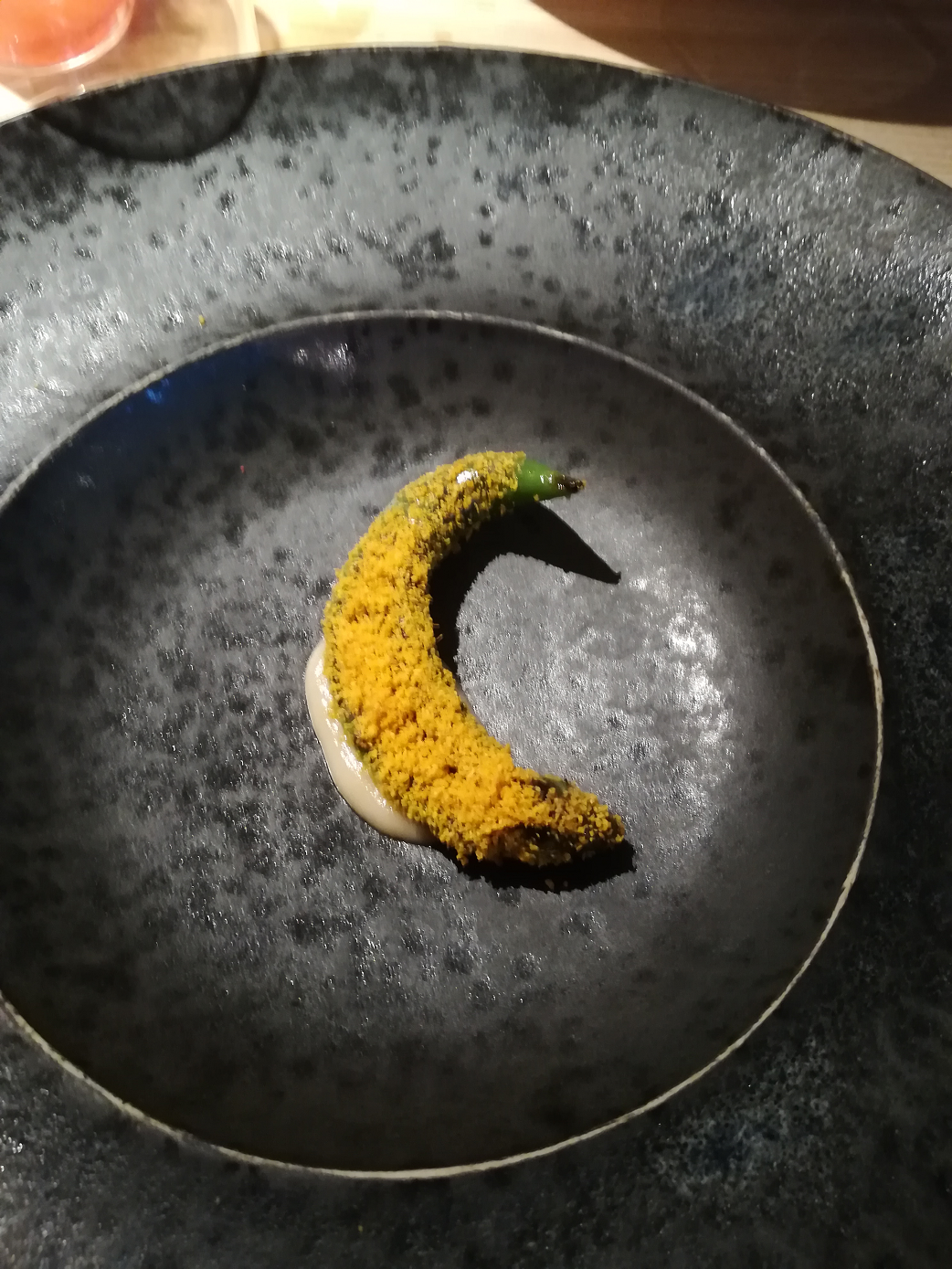
Little did I know that I had entered a West African version of Willy Wonka & the Chocolate Factory, I was living the lines of Ikoyi London saying to me, “Come with me and you'll be in a world of pure imagination.” The course had more plate like a tree trying to be a forest, a burnt pepper and a sprinkling of dust with something related to cassava in the narrative. This was a long way from Eba and stew, the ship of our common reality had sailed.
Within 4 visits from crockery to buccal cavity, we were done.
[Burnt pepper and cassava]
Exciting the taste buds
Mackerel is not necessarily fish you will find on the plate of the bourgeoisie, but we were told the next serving was caught today, strips of seemingly poached mackerel on a bed of banga fish paste with vegetables. It was savoury and comfortingly feeling like home cooking. The paired wine only seemed to assume any character in taste after we had tasted the dish. Though I would be honest, all the pairings were lifeless at first taste and not entirely exciting afterwards.
[Mackerel and a banga sauce]
By the fourth course, we had pumpkin and that was a revelation. I had to ask, could you really do this to pumpkin? By now, we were sold on this visit, it was one to write home about.
[Pumpkin]
Jollof the duck
The fifth course was, in fact, two courses, the duck arrived first and then a steaming bowl of smoked jollof rice, both of which were a titillation of a different kind, filling with excitement and a screaming desire for more. Oliver Twist would have died for the lust of the more that cried for.
[Duck and malt bread]
[Smoked Jollof Rice]
You can wish for death
By then, we have the table next to us occupied, in that group of four of probably Europeans or North Africans, the light or my eyes were dim was one Nigerian who was unaware he was being brought to Ikoyi London. The look of amazement, despair and incredulity at what was presented to him could easily have had someone of a different disposition toss the tables and walk out in disgust.
As soon as I ascertained he was Yoruba, I began in a language that would communicate the experience was to be cherished as the difference for which there would be stories to tell about a place called Ikoyi London. It was not about pretensions but innovation, the challenge to open one’s mind and consider that what we once knew does not have to be sacred and impervious to design, artistry and review. That is what Ikoyi London is about.
It’s a lot more wonderful
He asked if the restaurant was one to visit regularly, I could not say that would be wise, but for the whimsy and the occasion, a conversation and gastronomic banter, Ikoyi London would come ahead of many a restaurant. It is the deconstruction of the mundane and typical to create a new essence. This is bold and hardly experimental, it works.
The dessert was a rice ice cream with a biscuit I cannot remember the name of, paired with a cider. One sip had me reaching for my old cocktail. I do not have a palate for lager, beer, ale or cider. It was a miss for me.
[Rice Ice Cream]
It is easy to forget that dinner is a tasting menu and not a meal, which suggests the portions are for tasting as opposed to filling. We had a wonderful time before walking down Jermyn Street and taking a picture with the statue of Beau Brummell.
Ikoyi London is a variation, an exploration, an interpretation and an experience, you will lose more weight in your wallet than you’ll probably gain in ingested food, that is the nature of the location, the standard of service and daring proposition the proprietors have decided to unleash on its adventurous clientele.
There is a discretionary charge and I suppose we rarely exercise the discretion to refuse the charge. The service was top class, the waiters gorgeous and interesting. The restaurant was full by the time we left. Ikoyi London is what is possible if we decide that excellence matters above all else.


Wednesday, 15 February 2017

My life in shoes

My pain in shoes
I know the need for good shoes, well fitting shoes that last. As a child, I suffered from growth spurts, I grew out of my shoes long before I had worn them well.
In the time from the age of 10 when I shared the same shoe size with my mum to when I was 15, I took an extra shoe size for each birthday and my feet suffered for it.
Gifts of shoes where I was not at the fitting simply meant I had shoes that I forced my feet into and suffered painfully in the process. For a year, in secondary, I walked around barefooted, it was more comfortable than to be shod with horseshoes without the hoof.
Finding my comfort shoes
By 15, I was at 45-EU/11-UK and that was a tight fit, there was literally nothing bigger in the markets apart from a few unfashionable shoes. Sandals and slippers were my best bet for a comfortable fit. My feet stopped growing at 16, from then I have comfortably worn 46-EU/12-UK/13-US shoes, just in case you want to go shopping J
Once, my mum came upon a pair of shoes, at just the right size, 46-EU/12-UK, I plod the streets of Lagos with them and landed my first breakthrough job opportunity with a good sense of knowing I was the best person to represent myself anywhere. Then, a friend’s brother who was a shoemaker artisan made my shoes just before I left Nigeria. I had penny loafers, tennis shoes, and slip-ons at my disposal.
In the UK, most shops stocked a maximum size of 45-EU/11-UK, on that rare occasion, you find a couple of sizes larger, or rather, should I say longer, because there is a difference between ‘big feet’ and ‘long feet’; mine are long.
My cave of shoes
Going on Christmas holidays to Lancashire presented an opportunity when we went shopping at the K-Shoes factory shop (now defunct). They had shelves of all sizes and designs up to size 45-EU/11-UK and then probably 30 pairs of shoes altogether for people like me with longer or bigger feet. In all, maybe 3 in my size had a design worthy of giving a second look, I got them all.
At one time, I probably had over 40 pairs of shoes, not out of acquisitive hedonism but for the reason that anything fashionable of my size was just a rare commodity, you could not pass up on seeing something good, even if it was not immediately needed.
Eventually, I gave most of them away, I discovered Doc Martens boots and when my feet began to rot away because of a fungating tumour, a pair of monk shoes from the British Boot Company kept my feet together until the tumours healed.
My peace with shoes
Now, I found out about an online store Samuel Windsor from my The Week Magazine subscription, shoes hand-made in England of the highest quality and at amazingly affordable prices. Obviously, at such prices, you probably would not be disposed to repairing the shoes if, by comparison, you could replace a pair of shoes by the time you visited a shoemaker’s the third time.
When travelling from Johannesburg to Cape Town, I was accosted by a shoe shiner who on starting on my shoes commented glowingly about the quality and style of my shoes, suggesting he rarely sees shoes of that standard. He would know and I was proud to say, they were made in England and did not cost an arm and a leg.
I do not shop anywhere else for my shoes and as long as I have them delivered to my office, I have nothing to complain about the service. I know the value and comfort of good shoes, I suffered enough growing to know that you don’t spare a dime in search of comfort, style, quality, and affordability.


Sunday, 17 August 2014

Brought to heel and falling

In shoe paradise
I know what pumps are and anyone male or female who wears high stiletto pumps betrays a sense of style regardless of the hobby or vocation that inspires the person to be so attired.
On reflection, I really thought I knew what pumps were, only to realise that pumps derived from pompes which were originally worn by men and without a heel; they are shoes without fasteners, the back, sides, and toe of the shoes being covered.
Yet, one graphic about heeled shoes revealed a whole new world of heeled shoe knowledge that is just fascinating.


All kinds of
The Kitten heel is low and full, the Mary Jane suggests a strap over the middle of the foot, the instep, the D’Orsay has the sides uncovered, the Wedge is a full heel without space between the heel and the ball of the foot.
The Mule is like a heeled slipper, the Slingback is a strap at the posterior of the foot above the heel – the Achilles heel, the T-Strap is exactly what it is, then think of the design augmentations, Peep-Toe, Platform, Almond-Toe, Pointed-Toe and so on, which can be variations of shoe design.
However, the one that gets me is the Heel-less Ankle Strap, and add anything to the end of that. Whoever walks in those is ready to break a leg. Lady Gaga sported one of those, but videos of people making heelless shoes for themselves means orthopaedic hospitals might soon have custom. To be honest, they look like cow hooves.


Wednesday, 30 April 2014

Essential Snobbery 101: The rules on suit buttons

Insufferable me
I generally tend to attire myself formally or semi-formally, this seems to revolve around the suit or the jacket with certain accessories, such as the tie for the office and the day cravat for other occasions, the pocket square without it being too flamboyant. I feel quite comfortable in what I wear.
I worked in the City in the 1990s. I wear hats too, first a thin-brimmed fedora until I walked into a millinery in Cologne, where I took to wearing a porkpie hat with the front pulled down so it looks almost like a fedora. It is quite a nice fit.
In the really cold winter months, my bowler hat is a trusted ally in the wind and preserves the warmth on my head, very unusual but quite fetching, I’ll say.
Judged on appearance
Grooming and appearance say a lot about a man, and nothing annoys me more than the ignorance of the rule about buttons on a jacket.
Sir Hardy Amies, the late dress designer for the Queen, once said, “Never trust a man who does all buttons on his jacket up.” Sadly, much as I try to be forgiving about the lack of attention to this particular detail, some distrust of strangers and known people does creep in when that rule is broken.
Learn the rules
The bottom button is never done up, amongst other snooty rules of class, bearing, breeding, comportment and deportment.
There is a dignity to knowing what is right at the very least, but I would leave the detail to Art of Manliness Suit School: Part III – A Primer on Suit Buttons.
With the detail and the pictures, I hope I will not be assailed by the erroneous sloppiness that makes the better formality of a clothes horse look like the jackets on a frog that I see daily on my commute and at work.

Sunday, 2 February 2014

Thought Picnic: My continual outrage at sagging trousers

Redefining the man
Now, I ask you to read this without prejudice and a modicum of seriousness despite the possibility of being carried away with the imaginations of your mind.
It was on a television series that a lady’s thoughts were put to sound when after a pleasurable session, the man whose sexual prowess she praised got up and walked into the bathroom revealing what she thought in comparison was a 50-year old butt on a man with the performance of someone half his age.

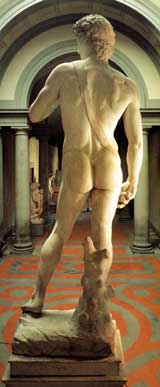
You only have to look at the Michelangelo’s David to see what the form is, the function, however, is open to interpretation or exploration. [Italian Renaissance Art]
Rounded at least
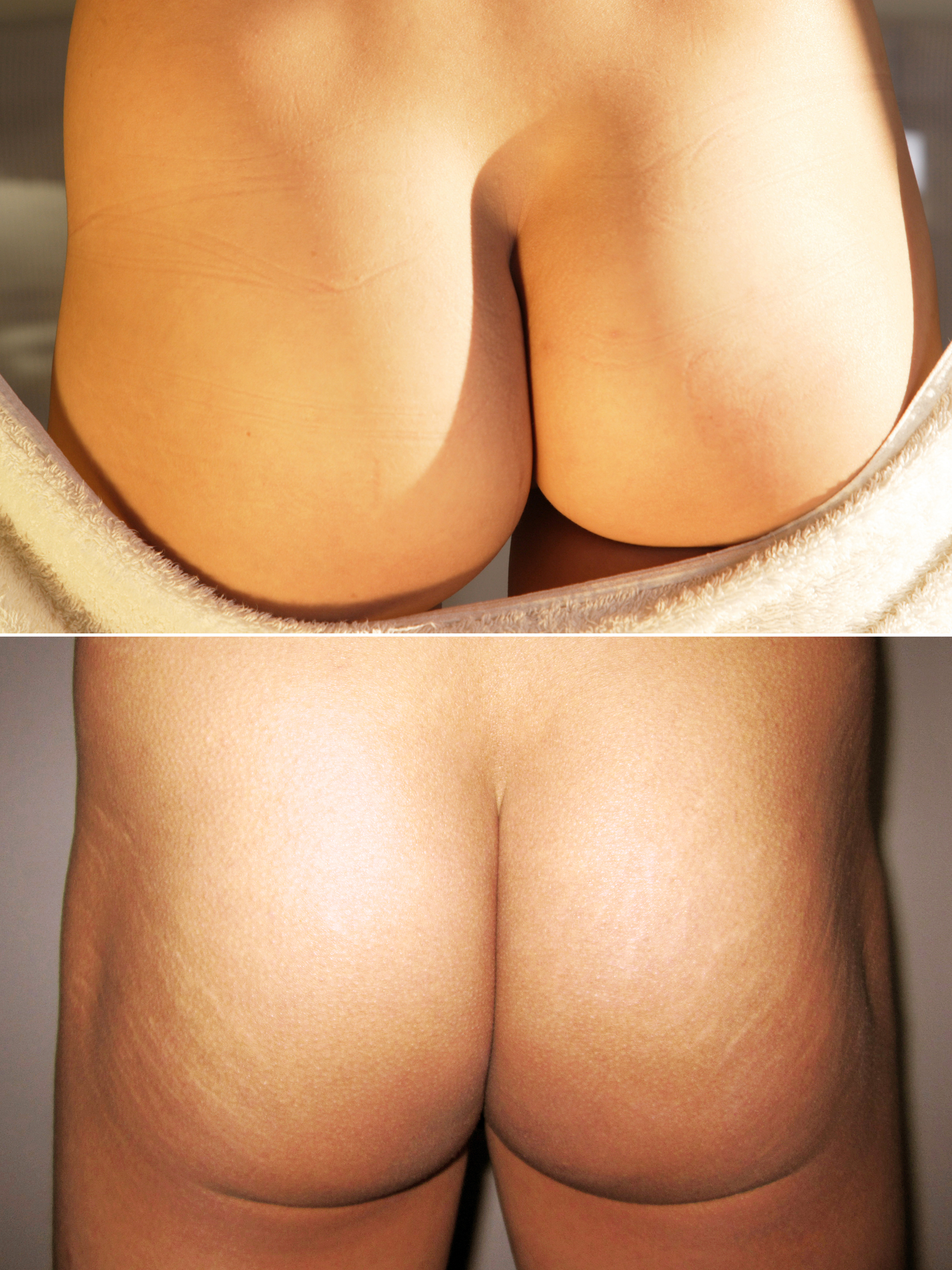
As I have written many times before, nothing looks as revolting as a lack of care to the backside usually due to unfashionable half-exposure revealing unsightly underwear on a backside that is neither comely nor interesting.
The buttocks (singular: buttock) are two rounded portions of the anatomy, located on the posterior of the pelvic region of apes and humans, and many other bipeds or quadrupeds, and comprise a layer of fat superimposed on the gluteus maximus and gluteus medius muscles. [Wikipedia]

The definition above suggests the backside is “two rounded portions of the anatomy”, I would lay emphasis on rounded which should not need definition.
Pants down dawdle
Obviously, no man can successfully answer the question, “How does my butt look in this?” There is no smart, stupid or indifferent answer that would not put you in the possible collision course with a flying brick.
That is not to say whether rounded or not, I want to see your trousers sagging and worse still, as a result of the low-hung apparel, the wearer presents in a group of many of that ilk, the gait of a badelynge of ducks. It is so ungamely that when they run, you almost expect to hear them quack, yet, I’ll rather watch wild ducks paddling in the village pond.
Why on earth these people cannot pull their trousers up escapes me because it is nothing to do with length or fitting, because in most cases they have rolled up the trouser leg.
This is not fashion
There is no positive validation in this sagging trouser culture because it apparently emerged from the US prison system where the incarcerated were not issued with belts for their ill-fitting clothes. This has since entered popular culture and with it, we have watched the many fashion suicides that traipse our streets in classless abandon.
You can call me old-fashioned, in fact, I do not care for what I am called, and as much as everyone is free to appear as they like either by outraging public decency or respectfully in cognisant of presentation and demeanour in the public space, let us not be in any discord about who automatically earns respect and essential courtesy.
Subjectively, if not subliminally, first impressions are first impressions are first impressions, go as you mean to be acknowledged.