Showing posts with label appearance. Show all posts

Sunday, 21 June 2026

Essential Snobbery 101: The King's Button

The King's Button

Edward VII was reputed to be a man who loved the pleasures of life, and his girth bore witness to this. At the table, he would leave the bottom button of his waistcoat undone, a practical habit that lent itself to ease and spared the garment the wear of exertion or extension on account of eating.

Observers at the table, nobles and servants alike, must have noticed this, and so it became the style. The party prince who became king after Victoria's long reign did it, and so should his subjects; consequently, this was deemed the way to dress. In time, the habit travelled beyond the waistcoat to the jacket and the suit, where it endures to this day.

How Custom Passes

The role of observers, those who watch a habit harden into a custom, is important to understanding how matters of style and taste are passed on. The observation must occur in close proximity and with a semblance of regularity, if one is to distinguish the trendy and the customary from a mere slip. The same applies to conduct, communication, and comportment, along with the courtesies that attend them.

A Quiet Decline

Recently, as I have gone about my own pursuits, it has come to my notice that elements of style and taste are not as commonplace as one would hope. Many gentlemen, and I use the word liberally, from the young to the much older, wear their jackets with every button done up.

There are times when I have had the urge to point this out, but such a thing is only acceptable with people you know, not with strangers. It suggests that the knowledge simply is not there. Style, however, is not optional; it is descriptive on sight, speaking before a single word is uttered.

There Is No Finishing School

I have been fortunate to keep the company of those who know these particular things, and to learn from them: leaving the lowest button undone, undoing all the buttons when sitting down, how to knot a tie, how to match a pocket square, and so on.

There is no class or finishing school for this. You learn it through association, something you have seen your father, uncle, brother, friend, mentor, or teacher do, where on occasion they have extended a hand to make that slight adjustment which separates you from a ragamuffin.

The Quiet Inheritance

There is a name for what I am describing, though I had circled it for years before I learnt it: cultural capital. It is the quiet inheritance of knowing, the accumulated sense of how things are done, passed not through lectures but through living alongside those who already possess it.

Unlike money, it cannot be handed over in a single gesture; it must be absorbed slowly, through observation and the occasional corrective hand on the shoulder.

What troubles me in my own observation is that this transfer appears to be faltering. The fathers, uncles, and mentors who once made that slight adjustment seem fewer now, or perhaps less inclined, and so a generation arrives at adulthood with the wardrobe but not the wisdom, the garment but not the grammar of wearing it.

Style as a Map

It is strange how a mere observation can tell of the road you have travelled, and how, in certain settings, it becomes the key to gaining access or being barred.

I want to be clear that this is not a plea for gatekeeping; I take no pleasure in barriers, and I would sooner extend the hand than withhold it. Yet I would be dishonest to pretend that appearances do not, quietly and often unfairly, dictate access.

A door opens or remains shut, an introduction is offered or withheld, a judgement is formed and acted upon, all before a word has been exchanged.

The cruelty of it is that those most affected are frequently the least aware it is happening, mistaking the closed door for bad luck rather than a code they were never taught to read. To name this is not to endorse it. It is simply to acknowledge that the rules exist, that they operate in silence, and that ignorance of them is rarely the fault of the person left standing outside.

No Personal Fault

This is not to be judgemental, even towards the utterly pretentious; eventually, that discomfort with one's appearance is betrayed by embarrassment. It is upward mobility expressed in acquisitive adornment, yet bereft of the quiet sophistication of the how and the why.

Whether this calls for a school of style, I cannot tell. It is not as though these people considered consulting the largest repository of knowledge, the Internet at their fingertips, to ask questions of style and taste as readily as they might ask for a recipe.

Invariably, as my gaze falls upon these occurrences, I am reminded that not knowing, or not caring, is not so much a personal fault. You were simply not privileged to keep the company of that kind of positive influence.

The Shops, and Where I Stand

Let us not forget the shops. I will not step into a suit shop where a mannequin has been improperly attired, as it suggests the staff have paid no attention to detail.

In one such shop, I asked to be fitted, but I was dismissed to the fitting room as though I were trying on a casual shirt or a T-shirt. I did not waste another minute there.

I do not intend to become a consultant on style. Rather, I will stick to the comfort of the familiar.

An Edwardian Inheritance

It is fitting, then, to return to the man who began all this. The Edwardian period was one of transition in dress as much as in everything else. For both men and women, this period balanced structured luxury with newfound freedom of movement. The rigid formality of the Victorian age was loosening, and comfort was beginning, quietly, to earn its place alongside propriety.

Edward VII's most enduring legacy was the tradition of leaving the bottom button of a waistcoat undone, a habit that has since transferred to jackets and suits alike. We observe it now without a thought for its origin, which is rather the point.

A king's button was only ever a habit that others chose to read, to copy, and to pass on. The grammar of how we dress is nothing more than a long chain of such small observations, handed down from one watchful eye to the next, until the day the chain is broken, and someone arrives, jacket fully buttoned, with no one left to make that slight adjustment. Just look away.

Blog - Essential Snobbery 101: The rules on suit buttons (April 2014)

A Google NotebookLM AI Podcast on this blog

Wednesday, 20 May 2026

Thought Picnic: Quiet Pursuits of Excellence

Quiet Pursuits of Excellence

Sometimes, I reflect on the fact that I lead a number of public lives which revolve around simply doing what I love, without seeking acknowledgement or reward. Something in my upbringing, in the observation of my parents and mentors, drives me towards excellence.

Much as I seek perfection, I quite frequently fall short. I upbraid myself, accuse myself, and talk to myself in a voice that calls me by my own name, because there is a conversation to be had before someone else has it with me. I would rather be my own critic, so as to be prepared to receive a better critique, one of recognition, of merit, and of acknowledgement.

Stories That Once Scared Me

There are stories from my past that frighten me, where the infirmity registered in the ravine of failure offered no opportunity or facility for recovery. It was unsalvageable wreckage, beyond repair, and utterly hopeless.

Yet, I have a better story to tell. No narrative I share today wallows in helpless resignation, for I am blessed beyond measure with testimonies of goodness, success, victory, and triumph.

The Pleasure of Work

At work, I enjoy what I do, not for the remuneration, of which I have once earned stupendously, but for the satisfaction that the knowledge and expertise I bring to bear on the mundane and the complex still matters.

I get to learn as much as I help others learn. I do what I do, not to get noticed, but to make things work. In the process, acknowledgement, respect, and rewards may well come. My motivation, however, is the pleasure.

Appearance and Carriage

In appearance, I have my own kind of dressing, something I pay attention to, because appearance and carriage matter. There have been times when I have been stopped so that pictures could be taken of me.

Once, a young man, after complimenting me, said he would love to have the confidence to dress like me. I suppose hardly a day goes by without some sort of recognition from strangers, and yet I am not out to attract attention. My motivation is simply looking good.

The Wealth of Expression

On this blog, I write about anything that takes my fancy, not for want of engagement or readership. To think there was a time when I hated writing, even though I had a great deal to say in conversation.

I am easily shy, quite introverted, and socially awkward and nervous in organised meetings where people are networking. It is in the use of words that I truly flourish. My motivation is the wealth of expression.

The Story of a Man

What all this says to me is to keep doing what I know to do, in the best possible way, with every aim to impact, improve, and perhaps impress. I will never be everyone's cup of tea, but I hope those who drink this tea enjoy it tremendously.

Decades of work, portrayal, and expression all become the story of a man. Thank you for coming by.

A Google NotebookLM AI Podcast on this blog

Wednesday, 30 April 2014

Essential Snobbery 101: The rules on suit buttons

Insufferable me
I generally tend to attire myself formally or semi-formally, this seems to revolve around the suit or the jacket with certain accessories, such as the tie for the office and the day cravat for other occasions, the pocket square without it being too flamboyant. I feel quite comfortable in what I wear.
I worked in the City in the 1990s. I wear hats too, first a thin-brimmed fedora until I walked into a millinery in Cologne, where I took to wearing a porkpie hat with the front pulled down so it looks almost like a fedora. It is quite a nice fit.
In the really cold winter months, my bowler hat is a trusted ally in the wind and preserves the warmth on my head, very unusual but quite fetching, I’ll say.
Judged on appearance
Grooming and appearance say a lot about a man, and nothing annoys me more than the ignorance of the rule about buttons on a jacket.
Sir Hardy Amies, the late dress designer for the Queen, once said, “Never trust a man who does all buttons on his jacket up.” Sadly, much as I try to be forgiving about the lack of attention to this particular detail, some distrust of strangers and known people does creep in when that rule is broken.
Learn the rules
The bottom button is never done up, amongst other snooty rules of class, bearing, breeding, comportment and deportment.
There is a dignity to knowing what is right at the very least, but I would leave the detail to Art of Manliness Suit School: Part III – A Primer on Suit Buttons.
With the detail and the pictures, I hope I will not be assailed by the erroneous sloppiness that makes the better formality of a clothes horse look like the jackets on a frog that I see daily on my commute and at work.

Sunday, 2 February 2014

Thought Picnic: My continual outrage at sagging trousers

Redefining the man
Now, I ask you to read this without prejudice and a modicum of seriousness despite the possibility of being carried away with the imaginations of your mind.
It was on a television series that a lady’s thoughts were put to sound when after a pleasurable session, the man whose sexual prowess she praised got up and walked into the bathroom revealing what she thought in comparison was a 50-year old butt on a man with the performance of someone half his age.

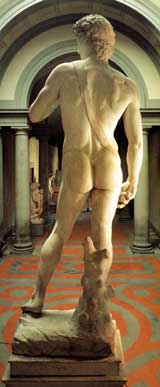
You only have to look at the Michelangelo’s David to see what the form is, the function, however, is open to interpretation or exploration. [Italian Renaissance Art]
Rounded at least
As I have written many times before, nothing looks as revolting as a lack of care to the backside usually due to unfashionable half-exposure revealing unsightly underwear on a backside that is neither comely nor interesting.
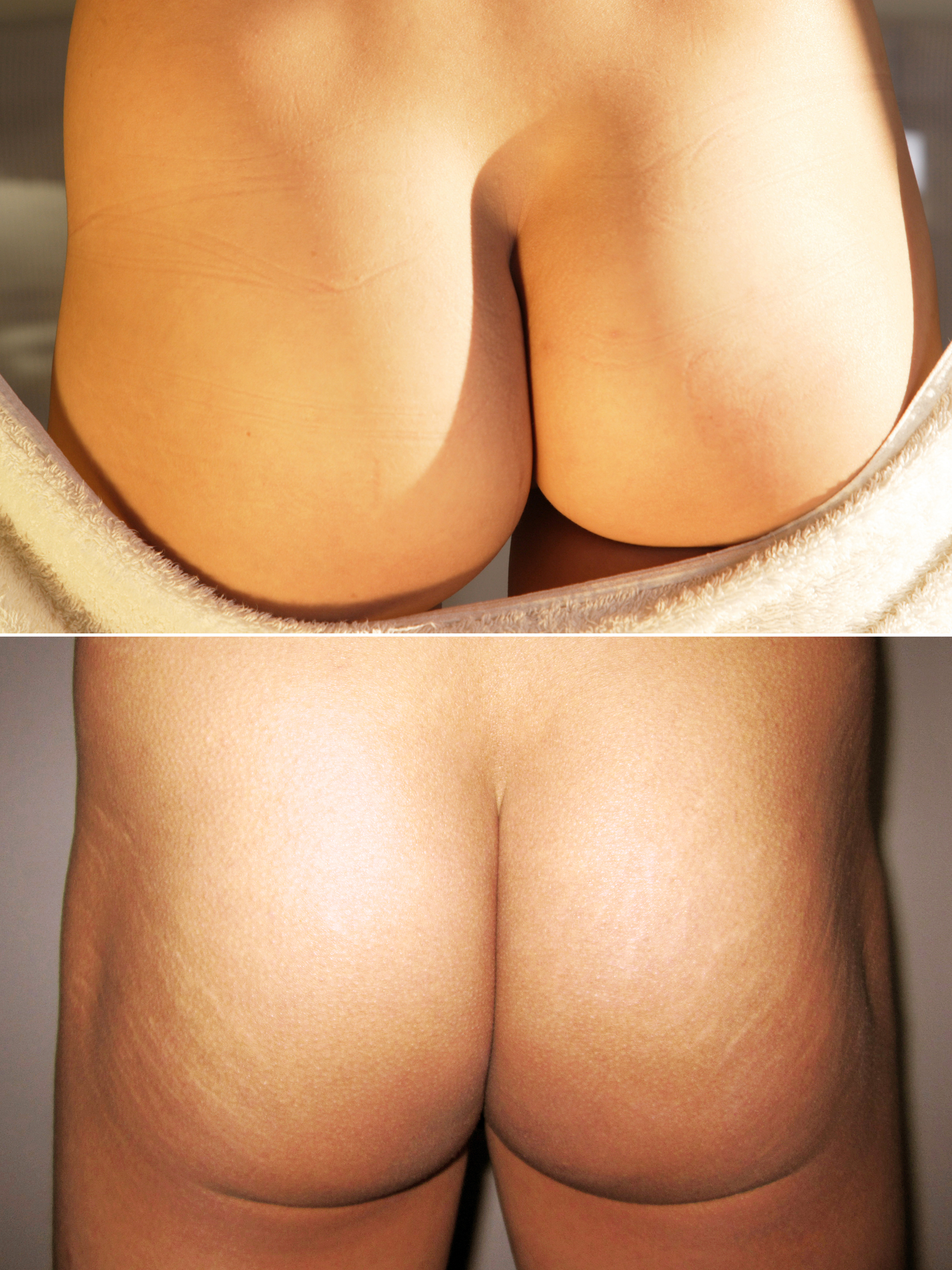
The buttocks (singular: buttock) are two rounded portions of the anatomy, located on the posterior of the pelvic region of apes and humans, and many other bipeds or quadrupeds, and comprise a layer of fat superimposed on the gluteus maximus and gluteus medius muscles. [Wikipedia]

The definition above suggests the backside is “two rounded portions of the anatomy”, I would lay emphasis on rounded which should not need definition.
Pants down dawdle
Obviously, no man can successfully answer the question, “How does my butt look in this?” There is no smart, stupid or indifferent answer that would not put you in the possible collision course with a flying brick.
That is not to say whether rounded or not, I want to see your trousers sagging and worse still, as a result of the low-hung apparel, the wearer presents in a group of many of that ilk, the gait of a badelynge of ducks. It is so ungamely that when they run, you almost expect to hear them quack, yet, I’ll rather watch wild ducks paddling in the village pond.
Why on earth these people cannot pull their trousers up escapes me because it is nothing to do with length or fitting, because in most cases they have rolled up the trouser leg.
This is not fashion
There is no positive validation in this sagging trouser culture because it apparently emerged from the US prison system where the incarcerated were not issued with belts for their ill-fitting clothes. This has since entered popular culture and with it, we have watched the many fashion suicides that traipse our streets in classless abandon.
You can call me old-fashioned, in fact, I do not care for what I am called, and as much as everyone is free to appear as they like either by outraging public decency or respectfully in cognisant of presentation and demeanour in the public space, let us not be in any discord about who automatically earns respect and essential courtesy.
Subjectively, if not subliminally, first impressions are first impressions are first impressions, go as you mean to be acknowledged.

Wednesday, 6 November 2013

Thought Picnic: The old-fashioned that works

From before time
There are traditional old-fashioned things that still matter and allow for the utmost courtesies and respect to be dispensed without reluctance.
As a man, my tastes are neither ostentatious nor vulgar, I am not given to trendy fads or trends, and I stick to the tried and tested things.
Politeness and courtesy are rarely reciprocated with rudeness, be it in speech or in writing, such comportment mellows the aggressive or the unfriendly; it costs nothing but it can do a lot.
Formal is normal
When attending anything remotely business-like, I always err on the side of being formal. Appearance should not be the judge of character or personality, but it always offers the first impression that could determine the tone and tenor of engagement.
Many times, I have seen people raise their game and put up the very best of manners when approached by the formal and sophisticated, though at the same time understated.
I have seen the readiness to help and respond to an enquiry besides the compliments that come with appreciating that a one has taken the time to turn out well and look the part that conveys an air of good bearing, self-assuredness and confidence.
First impressions
In Latin, we are told, Barba non facit philosophum - A beard does not constitute a philosopher, but the beard is a first impression that makes one approach to determine if a philosopher has been encountered. The variant in common parlance is “The clothes do not make the man,” but the clothes may create enough interest to find out about the man.
A man must needs have substance to back up the appearance; the clothes remove some of the prejudicial assessment that might accompany first interactions. No doubt, people like to be pleasantly surprised just as they do not want to be shocked, but if there is a way to prevent the unnecessary sway of emotions that could elicit either praise or rebuke, that is the better part of valour.
If you can, do it well. Work on both the substance and the appearance and do not leave any to chance or sloppiness. It works for me all the time.